
1863 words 7.5 minute read - Let’s do this!
November has officially arrived, and apparently the freight industry didn't get the memo that we're supposed to be winding down for the holidays! Southern California's ports are facing another critical labor deadline, manufacturing activity is picking up, ocean carriers are reporting surprisingly strong results, and trucking enforcement is putting additional pressure on available capacity. Meanwhile, airfreight demand continues to outpace available space, reminding everyone that the holiday shipping season doesn't come with a pause button. And here's what's making this market particularly interesting: demand is strengthening in several sectors, but the transportation networks supporting that growth are facing their own challenges. Let's get into this week's developments and what they mean for shippers
ILWU STRIKE UPDATE: ANOTHER EXTENSION, BUT THE CLOCK IS STILL TICKING! The nation's busiest container port complex has avoided an immediate labor disruption, but the possibility of a strike at Los Angeles and Long Beach remains very real. The Pacific Maritime Association (PMA) and International Longshore and Warehouse Union (ILWU) Local 26 have agreed to extend negotiations through midnight Pacific Time on Friday, November 6, with federal mediators assisting the discussions. The dispute involves approximately 250 terminal security workers, known as watchmen, whose contract expired in July 2025. Although they represent only about 2% of the ILWU workforce at the ports, their positions are spread across terminals handling a substantial portion of Southern California's container traffic.
According to PMA, affected facilities handle approximately 85% of Long Beach's cargo and 33% of Los Angeles' cargo. That's an enormous amount of freight potentially affected by a relatively small workforce! The concern isn't simply whether those 250 workers walk off the job. Other ILWU members, including longshore workers and marine clerks, could honor their picket lines, potentially disrupting vessel operations, container handling, terminal gates and rail-loading activity. And that's where the situation becomes particularly serious for inland shippers. Even if Union Pacific and BNSF continue operating their broader rail networks, a shutdown at affected marine terminals could prevent containers from being loaded onto departing trains. The timing couldn't be more challenging. Southern California was already dealing with significant rail congestion before the latest strike deadline. As of October 26th, approximately 35,688 import containers were awaiting on-dock rail service at LA/LB, including 10,562 that had been sitting for nine days or longer. A work stoppage could make an already difficult situation considerably worse. And here's another complication: even a relatively short disruption can have effects that continue after terminals reopen. Missed vessel windows, delayed train loading, disrupted truck appointments and accumulated containers can take days to work through once normal operations resume. For now, negotiations remain active, and both sides have expressed an interest in avoiding a disruption. The involvement of federal mediators offers another opportunity for an agreement. But until a settlement is announced, uncertainty remains. Importantly, this dispute is separate from the broader West Coast longshore labor agreement, which runs through 2028.
What It Means for Shippers
If you have containers moving through LA/LB, particularly cargo connecting to inland rail destinations, now is the time to review your transportation plan. Confirm terminal availability, monitor container status and coordinate closely with drayage and warehouse providers. Consider whether transloading or alternative inland transportation arrangements could help protect critical deliveries. A strike has not been confirmed, but preparing before operations are disrupted is far easier than scrambling afterward.
The Institute for Supply Management reported that U.S. manufacturing activity expanded for the tenth consecutive month in October, with its Manufacturing Purchasing Managers' Index climbing to 55.5%, up from 54.5% in September. And the improvement wasn't limited to one industry. New orders, production, exports and imports all showed growth, suggesting manufacturers are seeing stronger demand and increasing activity throughout their supply chains. But there's a catch - Supplier deliveries are slowing, and manufacturers continue facing elevated input costs. The supplier deliveries index reached 59.1, indicating that materials are taking longer to arrive. In other words, factories are getting busier, but the supply chains feeding them aren't necessarily getting faster. That's an interesting combination for the trucking, intermodal and warehousing industries. As production increases, manufacturers typically need more inbound materials, components and finished-goods transportation. And if supplier lead times continue stretching, companies may need to carry additional inventory or arrange expedited transportation to keep production schedules on track.
What It Means for Shippers
Stronger manufacturing activity could create additional freight demand heading into year-end. Review supplier lead times, communicate production forecasts and secure transportation capacity for critical inbound materials. When manufacturing schedules tighten, dependable trucking and flexible warehousing become especially valuable.
Remember all those predictions about ocean freight demand cooling off? Well, Maersk just delivered an interesting reality check! On November 5th, the global shipping giant raised its financial outlook again, citing stronger freight demand, continued port congestion and cargo associated with artificial intelligence infrastructure development. That's particularly noteworthy because the ocean shipping industry has been preparing for significant vessel capacity additions over the next several years. While longer-term forecasts suggest excess capacity could eventually pressure freight rates, today's market is still being supported by strong cargo flows and operational disruptions. And those disruptions matter. When ships spend additional time waiting at congested ports or traveling longer routes, they effectively remove capacity from the market, even when the global fleet continues growing. Meanwhile, investment in data centers, electronics and technology infrastructure is supporting demand for high-value equipment moving through international supply chains. So while ocean carriers may eventually face a capacity surplus, that doesn't necessarily translate into immediate relief for shippers. It's another reminder that the freight market doesn't always follow a predictable script!
What It Means for Shippers
Don't base transportation decisions exclusively on forecasts of future rate declines. Monitor actual vessel availability, sailing reliability and congestion at origin and destination. Strong demand and network disruptions can keep costs elevated even when additional ships are entering service. Flexibility in routing and booking remains essential.
The federal government's commercial trucking enforcement campaign continues to expand, with new roadside inspection initiatives targeting driver qualifications and safety compliance. On November 4th, the Federal Motor Carrier Safety Administration announced additional enforcement results under Operation Highway Shield, including the removal of more than 300 drivers from service during recent operations. The latest actions are part of a broader effort involving commercial driver's license compliance, English-language proficiency requirements and other federal safety regulations. And while the immediate focus is highway safety, the potential implications for freight capacity are significant. The trucking industry is already dealing with high operating expenses, insurance costs and financial pressure on smaller carriers. Removing noncompliant drivers and equipment from service can further reduce available capacity in certain markets. But here's the important distinction: tighter enforcement doesn't mean every trucking lane is suddenly facing a shortage. The impact will vary depending on geography, equipment requirements, carrier networks and the concentration of affected drivers. For shippers, the larger issue is ensuring transportation providers remain compliant, properly insured and capable of delivering consistent service. Because a low freight rate doesn't offer much value if the truck can't legally complete the shipment!
What It Means for Shippers
Work with established, properly vetted transportation providers and review carrier compliance procedures. Avoid relying on unverified last-minute capacity for critical freight. As enforcement continues, reliable carrier relationships and advance planning can help protect service while maintaining safety and regulatory compliance.
The holiday air cargo season is heating up, and the latest pricing figures are getting everyone's attention. According to World ACD Market Data, global air cargo spot rates increased another 5% during the week of October 19–25, reaching an average of $3.80 per kilogram. That's approximately 38% higher than the same period last year. And here's what makes those numbers particularly interesting: global air cargo tonnage actually declined 2% during the same week. So why are prices increasing while volumes are slipping? Available capacity remains constrained on several major trade lanes, and fuel surcharges continue adding pressure to transportation costs. Asia-Pacific spot rates rose 6% week over week, while European origin rates climbed 7%. Meanwhile, the International Air Transport Association reported that September global air cargo demand increased 7.7% year over year, significantly outpacing capacity growth of just 2.7%. That imbalance helps explain why rates remain elevated heading into the holiday season. With technology shipments, e-commerce activity and time-sensitive industrial freight competing for space, air cargo capacity could remain expensive through year-end.
What It Means for Shippers
Book airfreight early whenever possible, particularly for critical international shipments. Compare expedited services carefully and consider whether dedicated ground transportation can support domestic recovery and final delivery. For AOG, automotive and production-critical freight, having emergency transportation options available before a disruption occurs can make all the difference.
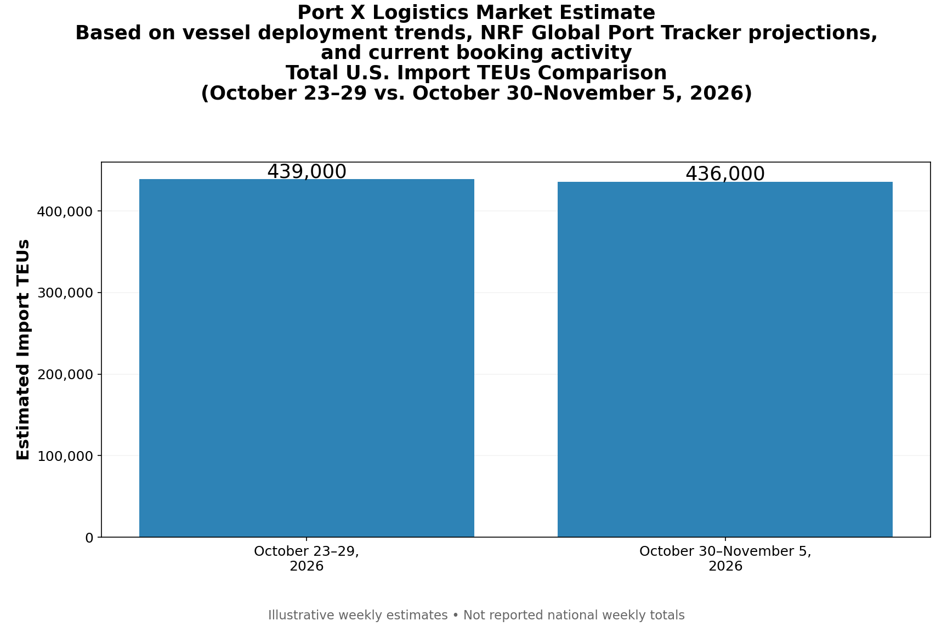
TEU volumes went down 0.68% over last week, with majority coming into Los Angeles 18.8%, Long Beach 15.4% and New York/New Jersey 15.5%.
What’s happening at the ports and rails?: Houston: The Port Houston is now exploring a potential Project 12 expansion while advancing plans for additional container capacity north of Barbours Cut Terminal. And the timing couldn't be better. September container volumes jumped 11% year over year to 376,419 TEUs, with loaded imports surging 16%. Through September, Houston handled approximately 3.35 million TEUs, up 2% from 2025. The message? Houston is strengthening its position as a major Gulf Coast gateway, with investments aimed at accommodating larger vessels and growing cargo demand. While the proposed expansions are still in planning, the port is clearly looking ahead!
What It Means for Shippers
Houston's improving volumes and long-term expansion plans are encouraging signs for Gulf Coast trade. But stronger cargo activity also means coordinating drayage, transloading and inland deliveries early. As Houston grows, having dependable local transportation and warehouse capacity will be essential to keeping freight moving efficiently.
Houston freight doesn't slow down, and neither do we! With 32 drayage trucks, including long-haul capacity, Port X Logistics is ready to tackle everything from routine container moves to those shipments that need a little extra muscle! And we're not just about trucks! Our La Porte transload warehouse is equipped to handle everything from palletized freight to heavy-duty cargo like lumber and industrial coils. Need to unload, reload, store or reposition freight? We've got you covered - Got freight moving through the Lone Star State? Let's get it rolling! letsgetrolling@portxlogistics.com
Did You Know? BIG NETWORK. REAL ASSETS. SERIOUS MOVING POWER!
From coast to coast and across the Canadian border, Port X Logistics has the trucks, the technology and the team to get it done. With strategically positioned company-owned assets and a trusted network of owner-operators, we're ready to tackle freight at major ports and rail ramps throughout the U.S. and Canada. Busy terminals? Tight appointments? Last-minute curveballs? That's where we shine! Our nationwide network combines local expertise, reliable capacity and real-time visibility to keep your freight moving without the unnecessary headaches. Because great logistics isn't just about finding a truck. It's about having the right people, equipment and game plan behind every move!
More coverage. More flexibility. Less freight drama.
Got containers on the move? Let's put our network to work! letsgetrolling@portxlogistics.com