
2240 words 8 minute read - Let’s do this!
We are halfway through October, and the freight market has apparently decided that five different things can happen at once — and none of them have to make sense together. U.S. railroads are celebrating record intermodal volumes, trucking companies are still wrestling with painfully high operating costs and ocean carriers are adjusting capacity. Meanwhile, international shipping is dealing with another serious security escalation, just as businesses are preparing for the final stretch of the year. The interesting part? Strong freight activity doesn't automatically mean transportation is getting easier. In fact, some of the biggest challenges right now are happening between the different pieces of the supply chain. Let's get into it!
The Association of American Railroads has delivered some impressive numbers, and this time we're looking at a much bigger story than another weekly rail traffic update. According to the AAR's October industry report, the third quarter of 2026 was the strongest quarter ever recorded for U.S. intermodal transportation. Railroads originated nearly 295,000 containers and trailers per week during September, following an equally impressive August. And the momentum isn't disappearing. For the week ending October 10th, U.S. railroads handled 302,252 intermodal containers and trailers, increasing 10.4% compared with the same week in 2025. Total rail traffic reached 534,256 carloads and intermodal units, up 7.2% year over year. But here's what makes this particularly interesting: the strength isn't limited to containers. September marked the ninth consecutive month of year-over-year carload growth, with 17 of the 20 major commodity categories reporting increases. Steel shipments were particularly strong, reflecting continued industrial and manufacturing activity. Why is intermodal suddenly so attractive? High diesel prices, tighter trucking capacity and improved railroad service are encouraging more shippers to reconsider rail for longer-distance inland transportation. But record volumes create their own challenges. When more freight shifts toward intermodal, terminal processing, container availability and the timing of final-mile trucking become increasingly important. The railroad might have capacity to move your container across the country, but somebody still needs to pick it up at the other end.
What It Means for Shippers
Intermodal deserves another look, particularly for longer inland lanes where trucking costs have climbed. However, compare total door-to-door transit time and cost rather than linehaul pricing alone. Confirm destination drayage, equipment availability and delivery appointments before committing to a rail routing. A lower intermodal rate can lose its advantage quickly if the container spends several extra days waiting for its final move.
Here's one of the biggest contradictions in the domestic freight market: trucking capacity can tighten even when freight demand isn't exactly setting records. Recent transportation market analysis shows that truckload volumes and carrier margins remain relatively subdued, but the available supply of trucks and drivers has been changing. Operating costs remain a major factor. The national average on-highway diesel price for the week of October 12 was approximately $6.179 per gallon, down just two cents from the previous week but still $2.514 higher than the same period last year. That's an enormous year-over-year increase for an industry where fuel is one of the largest operating expenses. At the same time, smaller carriers continue facing pressure from insurance, maintenance, financing and equipment costs. When operators reduce fleets, park equipment or exit the market, the amount of available capacity can shrink even without a corresponding surge in freight demand. And that's exactly why the current environment deserves attention. A shipper may hear that overall trucking volumes are relatively soft and assume trucks should be easy to find. But available capacity is increasingly dependent on the lane, equipment type, pickup requirements and how much advance notice is provided. The same challenge extends beyond long-haul transportation. Drayage availability, chassis positioning, transload warehouse appointments and outbound trucking all have to work together. One missed appointment can create a chain reaction that affects the entire shipment.
What It Means for Shippers
Start securing capacity before the container arrives, not after it's available for pickup. Coordinate drayage, transloading, warehouse receiving and outbound transportation as one continuous move. Review fuel surcharge structures and avoid assuming that soft national freight demand automatically translates into readily available trucks. The market may not be booming everywhere, but that doesn't mean the right truck will be waiting when you need it.
After weeks of schedule adjustments and capacity management, the ocean freight market is entering another transition. Drewry's latest cancelled sailings analysis, released October 9th, shows that carriers are planning 34 blank sailings across the major East-West trade lanes between October 12 and November 15th. That represents approximately 5% of the 713 scheduled sailings, meaning 95% are currently expected to operate. It's a notable shift toward greater scheduled capacity compared with periods when carriers were aggressively removing sailings to manage available space. The distribution of cancellations is also interesting. Approximately half are concentrated on Asia-to-Northern Europe and Mediterranean services, while 32% involve eastbound Trans-Pacific routes and the remaining 18% affect Transatlantic services. Meanwhile, Drewry's World Container Index stood at $4,351 per 40-foot container on October 8, declining 2% from the previous week. The easing reflects a combination of softer demand on certain lanes, changing vessel deployments and additional effective capacity entering the network. But before anyone celebrates dramatically cheaper ocean freight, there's an important distinction. More scheduled vessel capacity doesn't automatically mean lower delivered transportation costs. Cargo still has to move through terminals, onto inland equipment and into receiving facilities. And when ocean arrivals become uneven, inland transportation networks can experience temporary surges even as vessel space becomes easier to secure. That's why ocean pricing and inland capacity can tell two completely different stories at the same time.
What It Means for Shippers
Revisit ocean freight pricing where market conditions support renegotiation, but don't lose sight of the complete transportation plan. Monitor sailing reliability, confirm actual vessel departures and coordinate inland transportation before arrival. A better ocean rate is always welcome, but savings can disappear quickly when containers encounter storage charges, missed appointments or limited drayage availability.
Unfortunately, one of the most serious developments this week involves maritime security. Reports from October 14th and 15th indicate that two commercial vessels, including the Singapore-registered container ship GFS Pride, sank following separate attacks near the Strait of Hormuz. The incidents represent a significant escalation in an already dangerous operating environment, with additional attacks reported against commercial vessels in the surrounding region. The consequences extend far beyond the vessels directly involved. The Strait of Hormuz is one of the world's most important energy transportation corridors. Continued disruptions affect tanker movements, vessel insurance, fuel availability and the cost of moving cargo across global transportation networks. And while container shipping may not depend on the waterway to the same extent as energy transportation, the broader freight industry remains exposed through fuel costs, vessel routing, insurance premiums and equipment repositioning. Energy markets are already reacting. On Thursday, Brent crude was trading near $105 per barrel as markets weighed potential changes to restrictions on Russian oil tankers against renewed attacks and supply concerns. That combination creates an unusually complicated environment for transportation pricing. Even when crude prices temporarily decline, uncertainty around vessel safety, fuel supply and shipping routes can keep transportation costs elevated. The result is another reminder that international freight doesn't operate in isolation. A disruption thousands of miles away can eventually show up in a domestic fuel surcharge, ocean rate quotation or equipment availability problem.
What It Means for Shippers
Review routing exposure, cargo insurance and potential emergency surcharges for shipments moving through affected regions. Confirm whether quoted transit times include diversions or additional security-related delays. For domestic transportation, keep watching fuel costs and surcharge adjustments, particularly on longer truckload lanes. When global energy transportation becomes unstable, the financial impact rarely stays confined to one part of the supply chain.
The security situation in the Strait of Hormuz took a dangerous turn this week when the Singapore-flagged container ship GFS Pride sank after being struck while transiting the waterway. The 2,824-TEU vessel caught fire before sinking, although all 21 crew members were safely evacuated. A second container ship, GFS Giselle, was also struck but managed to reach a safe anchorage. The incidents are a reminder that the growing security threat extends beyond oil tankers to containerized cargo and other commercial shipping.
What It Means for Shippers
While the GFS Pride was not confirmed to be carrying U.S.-bound freight, the implications reach well beyond the Middle East. Continued attacks could increase war-risk insurance premiums, disrupt regional feeder services, complicate vessel scheduling and add pressure to global fuel and transportation costs. Shippers with Middle East exposure should verify vessel routings, insurance coverage and contingency plans rather than assuming a scheduled sailing will operate normally.
TEU volumes went up 1.15% over last week, with majority coming into New York/New Jersey 15.5%, Los Angeles 18.5% and Long Beach 15.1%
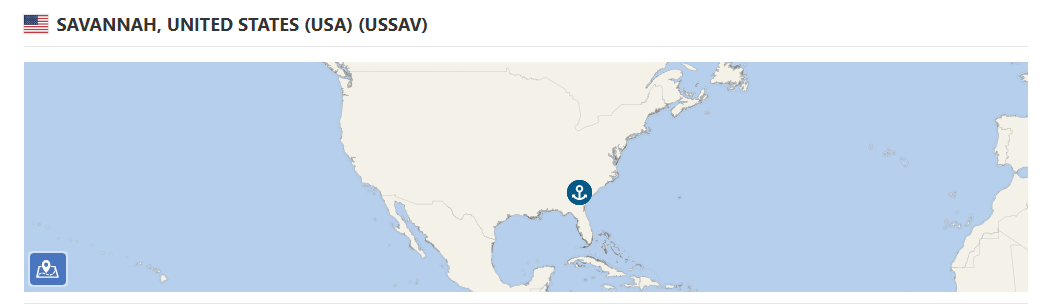
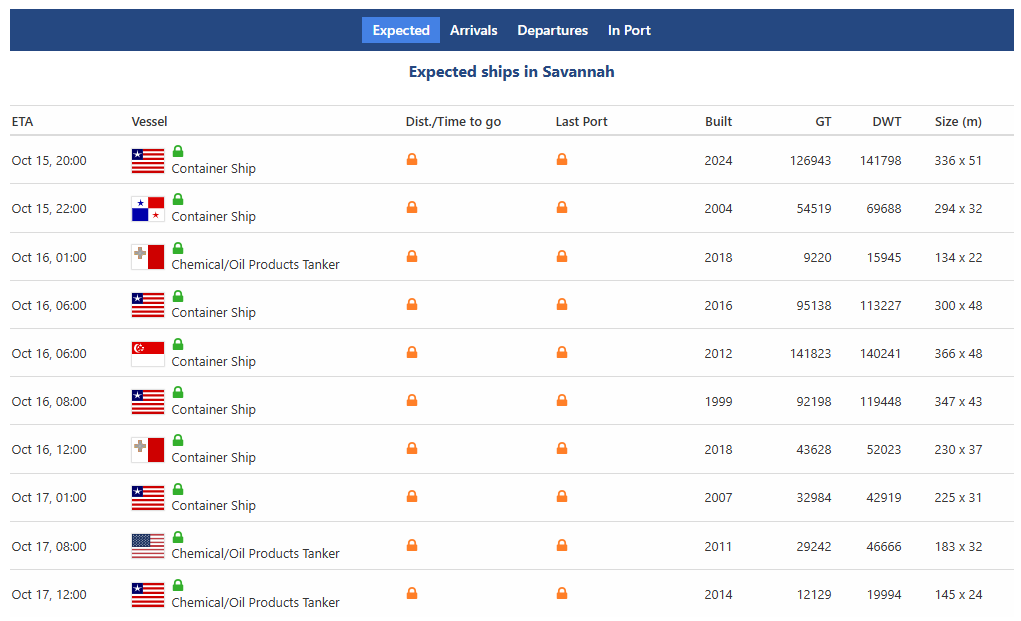
What’s happening at the ports and rails?: The Port of Savannah just cleared a major hurdle in its next chapter of growth! On October 14, the Georgia Ports Authority announced federal approval for a $2.3 billion container terminal on Hutchinson Island. The 350-acre facility will add 3.5 million TEUs of annual capacity, helping Savannah reach its goal of 12 million TEUs annually. Construction is expected to begin in January 2028, with completion anticipated in the mid-2030s. And the timing couldn't be better! Savannah just recorded its busiest September ever, handling 504,015 TEUs, up 3.7% year over year. Combined with the ongoing $1.6 billion Ocean Terminal redevelopment, the expansion represents a major investment in East Coast cargo capacity and inland rail connectivity.
What It Means for Shippers
While the additional capacity is still years away, Savannah's expansion could mean greater routing flexibility, improved rail connections and better access to growing Southeast markets. In the meantime, strong import volumes make advance planning for drayage, transloading and inland transportation more important than ever.
Savannah and Charleston freight on your radar? We've got you covered! Our Port X South Atlantic team is ready to put our dedicated drayage capacity to work, backed by our Savannah transload warehouse for those shipments that need a little extra attention. From quick container pulls and cross-docking to transloading and inland deliveries, we're here to keep your cargo moving and your costs under control. Great rates, reliable capacity and a team that knows how to get things DONE! Have containers headed our way? Don't wait until the clock starts ticking — reach out to letsgetrolling@portxlogistics.com and let's get rolling!
Did You Know? WHEN THE FREIGHT MARKET GETS TIGHT, PORT X BRINGS THE MUSCLE! Record intermodal volumes, tightening trucking capacity, rising operating costs and unpredictable vessel schedules — October is giving the logistics industry plenty to juggle! And while ocean carriers adjust capacity and freight keeps flowing inland, the real challenge is making sure there's a truck, a chassis, a warehouse and a plan ready when that container hits the ground. That's where Port X Logistics comes in! Our high-performing, asset-based drayage operations in Los Angeles, Kansas City, Memphis, Denver, Chicago, Houston and Savannah give shippers the equipment, experienced drivers and local expertise to keep containers moving when capacity gets complicated. And we're not stopping at the terminal gate! With transload warehouses in Los Angeles, Kansas City, Houston, Denver and Savannah, we can help bridge the gap between port pickup, warehouse handling and over-the-road transportation — keeping cargo moving and helping customers avoid costly delays.
Because in today's market, finding a truck is only part of the battle. Getting every piece of the shipment to work together? That's where experience makes all the difference. More capacity. More flexibility. Fewer headaches. And a whole lot less “we can't find a truck!” energy. Don't wait until your container is available to start looking for solutions. Put Port X to work! Reach our team at letsgetrolling@portxlogistics.com and let's get rolling!